The robot age, the end of the class struggle?
The robot age, the end of the class struggle?
Diego Saravia, Nilsa Sarmiento and Rafael Rico Ríos
First published in spanish in Rebelion. Translated by Google. http://www.rebelion.org/noticia.php?id=221277
https://medium.com/@saraviadiego/la-era-del-robot-fin-de-la-lucha-de-clases-c9b596c441c3#.17o7ycvcw
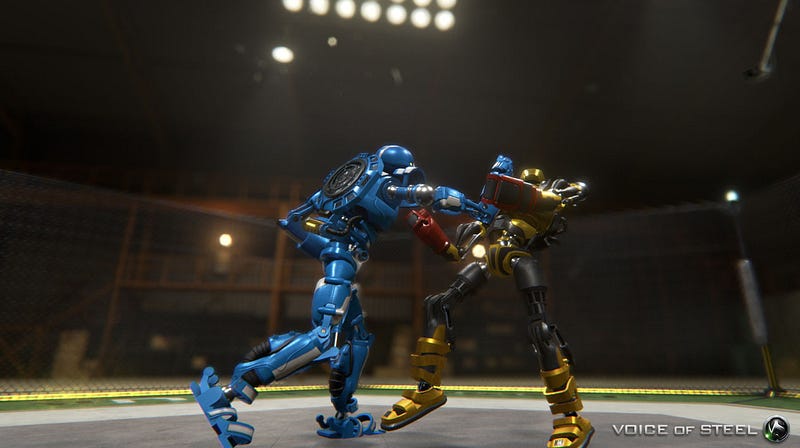
“The beginning of the mistake is from growing meat for the king and wine for the church.”, Fukuoka
“The error continued to create machines and now continues when we make robots for the rich.”
“Artificial intelligence could mean the end of the human race,” Stephen Hawking
Putting apocalyptic in the “age of technology” seems to be in fashion and not just because Stephen Hawking himself has signed up.
But let’s play “science fiction”, imagine a future planning of humanity based on technology to end the class struggle, would it make sense?
Some data: 12.5% of workers in the European Union are poor, in Spain it is 15% and in the US it is 25% and it has not stopped rising in recent years.
Another curious fact is the increase of salary supplements and subsidies for the survival of an increasingly anorexic middle class. If this wage supplement does not exist, a significant percentage of adults with full-time jobs would live below the poverty line. Is the work losing its value?
James Livingston in Fuck Work states: “Oxford economists studying job trends tell us that almost half of existing jobs, including those involving non-routine cognitive tasks (basically thinking) are in danger of death as a result of The computerization that will take place in the next 20 years “and” the types of Silicon Valley that give TED talks have begun to talk about human surplus as a result of the same process: cybernetic production. “Recommends the book Rise of the Robots Of the robots), 2016, that considers a book of social sciences more than of science fiction.
Usually we see news of how they are replacing employees by robots and artificial intelligence. And not just physical labor, according to a 2015 Nomura report, about half of all jobs in Japan could be made by robots and artificial intelligence by 2035.
A science fiction story
Here is our argument for a science fiction story: Today humanity is preparing to replace large portions of human labor with robotic work. In the coming decades, we would see how the human workforce and the mind of the human being become less and less necessary in much of the productive segments.
In this science fiction story we will start from the idea that capitalism plans to defeat the class struggle by destroying or marginalizing the value of labor in order to reduce its dependence on capital.
The first offensive to dilute the value of labor would be linked to the boom of the financial economy versus the industrial economy. It followed the increase in debt as a form of negative income to increase consumption. Now, in a new offensive, the financial has been combined with the technological to form a diabolical cocktail against the value of work.
If technological development did not require large masses of workers and labor lost value, our first reaction could be positive: we will not need to work as hard. We could engage in pleasant activities, artistic, educational, etc., or simply continue to increase banal communication in social networks.
The second thought is sinister: for the first time in human history there is a clear risk that capitalists will break dependence on the working class to produce goods and services, which will not be able to consume them either, since in the current scheme, who does not work Can not consume.
Thus “the rich” could dedicate all their new “labor” technological force to build luxury products for themselves and more productive robots. They would reach their dream of ending the class struggle. In addition, they would limit the consumption of natural resources only for their self-consumption products, would “save” the biosphere and would have abundant resources.
This strategy could run the risk of provoking a global rebellion. “The rich” would need “social peace” and would implement a third instrument consisting of leaving a portion of their robots and old machinery producing elementary consumer goods to maintain a consumer class, the “consumariate”, and implement income plans Universal basis that maintains that low consumption of survival.
Humanity is transformed
The new humanity of this history would be formed by residual inhabitants and dominating possessors.
Imagine a gigantic investment in science and technology with a fantastic development in the private sphere, advances that would be owned by the capitalists. Only the richest would have the rights to these advances. Creonization, transhumanism, artificial intelligence, genetic engineering, bionics, minds transferred to electronic systems, would create a “speciation” towards “superhumans” that could extinguish residual humanity.
To implement this plan would need to develop more technological advances and, above all, a huge capital investment in robots and technology. In an economic time when financial capital has deflated, with negative interests in several major economies, the robots would allow an “awakening” of capital.
In “Crisis and Revolution”, we saw as “the rich” through the crisis of 2008 weakened the middle classes in various parts of the world by standardizing exploitation.
In our science fiction history, the project has become even more ambitious: with the banner of robotization of all human labor and the elimination of ever larger parts of the world’s population through wars and environmental disasters, “the rich” would not need Human labor, they would no longer need workers and they would no longer have to negotiate, losing in a definitive manner the class struggle as we know it since the dawn of humanity.
And the borders would rise again from the hand of fascism
A project of this nature would not serve the immigrants, it would no longer be necessary cheap human labor and nor control the native workers. The Western right would have to re-raise the borders and criminalize the immigrant, the project of “the rich”, once globalizing, goes to another stage.
“The rich” would close borders and stabilize “islands” with military potential to contain countries controlled by interests outside their plans. This would prevent them from advancing on the resources they enjoy.
The impossibility of including the whole planet in its plan, by the existence of powerful non-aligned countries, would force them to implement neo-fascism. To prevent democracies from installing the distribution of what was produced by robots, a new fascist wave would be needed in the central countries. “The rich” would no longer need to use “democracy”, would recover fascism.
In these island countries controlled by the “rich”, the few humans who enjoy being so, would evolve independently and “speculate” (new species), along with artificial selection, genetics and bionics, reaching ever more Time of life and more development potential. Those who can afford it will have incredible resources of transformative medicine that can extend life considerably. The residual inhabitants would be left to their fate.
How to fight against this plan?
Every history of perverse plans has the good ones who resist.
The Free Software allowed to break with the appropriation of the knowledge of the capitalist system avoiding the domination through the systems of information and communication becoming a form of struggle. It was necessary to find formulas to access how the systems were programmed, in a world where all day-to-day processes began to be controlled with software. The Free Software movement was born that allowed thousands of programmers to partner to deal with the large software industries that sought to appropriate the knowledge production of their workers.
Robots are not intangible goods, like software. In that sense, they can not be free because their manufacture consumes finite resources. However, the plan would be that in the future robots, with artificial intelligence, can manufacture themselves. If this is added to reduce the world population, to implement the ecology and “salvation of the planet” for the purposes of this Machiavellian project, energy and other resources would again be abundant ceasing to be limiting. So they could reach a productive threshold where they could be practically free.
The way to combat this plan would be to fight to regulate the concept of ownership of the industrial age applied to knowledge. Struggle that was already initiated in the 20th century in the framework of Free Software and Free Knowledge.
As long as intellectual property rights ensure that robot owners control everything they produce, including more robots, it would be impossible for mankind as a whole to share in its benefits.
The hacking of robots and their possible use by interests favorable to the residual humanity will be fundamental in the struggle of resistance. It would be necessary to think of obtaining a large mass of public robots at the service of the general population developed by free territories or by “hooligan” countries. It would have to contain the environmental destruction, controlling the consumerism, to put at risk the bill of the billionaires.
Hacking strategies and political accumulation can be useful in blocking this dominating project. Robots must become allies of the working class against the enemy class robots exploited by the capitalists.
It would all depend on the relative power of the actors and their ability to articulate policies. The new political liberation movements would base their strategies on knowledge management and the nature of ownership of the production of robots to avoid defeat in the class struggle. Both classes would dispute the control and regulation of robots as means of production with their particular “self-replicating” nature.
When we thought they were going to dominate the world with software, we built Free Software. Today it would be more necessary than ever to release the forces of robotics and artificial intelligence to put them at the service of all humanity.
And to conspire, we should prevent future artificial intelligences from appropriating the production of wealth and replacing humanity itself, that of the “rich” and that of the residual humanity, right Stephen?
Referencias:
https://aeon.co/essays/what-if-jobs-are-not-the-solution-but-the-problem
http://www.nomuraholdings.com/investor/library/ar/2015/pdf/nomura_report_all.pdf
http://www.rebelion.org/noticia.php?id=81442
https://futurism.com/stephen-h
http://www.realclearfuture.com
https://www.bloomberg.com/news
http://fortune.com/2016/11/06/
https://futurism.com/stephen-h
https://futurism.com/a-new-bas
http://www.context.org/iclib/ic14/fukuoka/
Reuters.com brings you the latest news from around the world, covering breaking news in markets, business, politics…www.reuters.com
http://www.rebelion.org/noticia.php?id=221277
Diego Saravia is an Industrial Engineer; Nilsa Sarmiento holds a degree in System Analysis; Rafael Rico Ríos is a Telecommunication Engineer.
Taken from Rebelion, who has published this article with the permission of the authors using a Creative Commons license, respecting their freedom to publish it in other sources.